
03 FOAM-IN-PLACE
PVC and PU sealing compounds
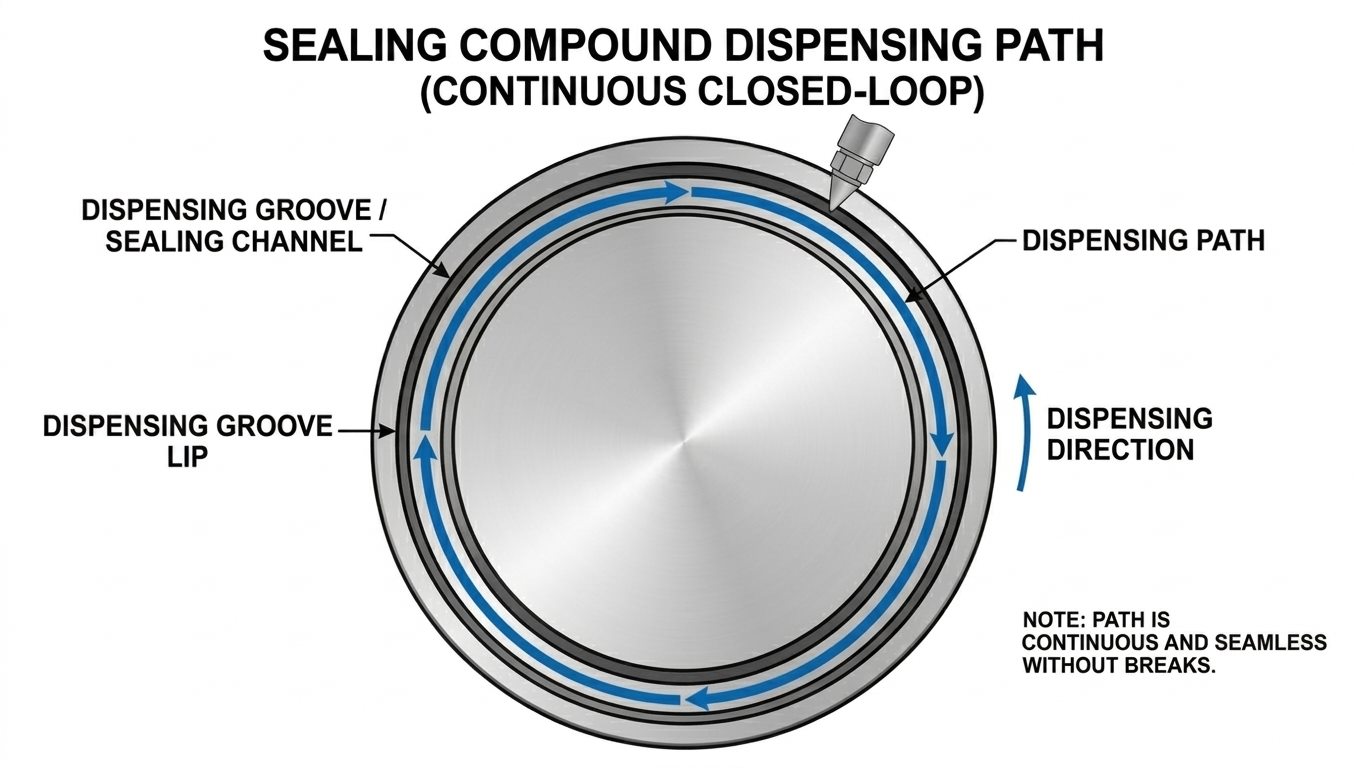
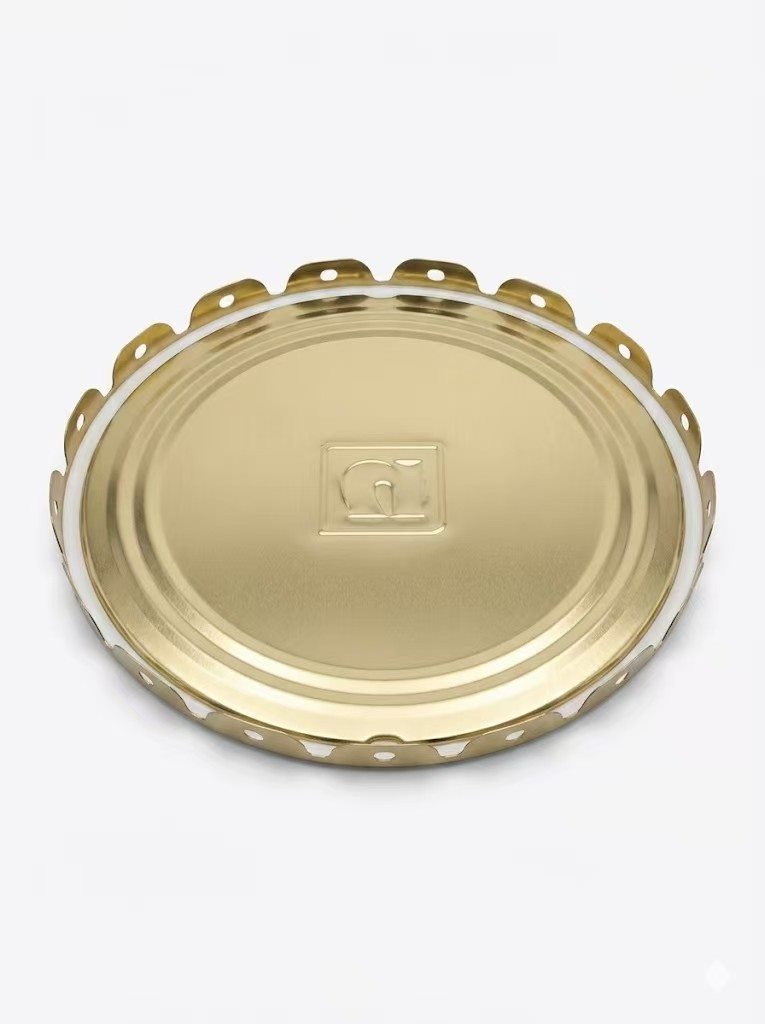
Continuous closed-loop gaskets formed directly in the lid groove, supported by matched dispensing machines.
COMPOUNDS
One-component or two-component
PROCESS COMPARISON
Match the compound, machine and curing method
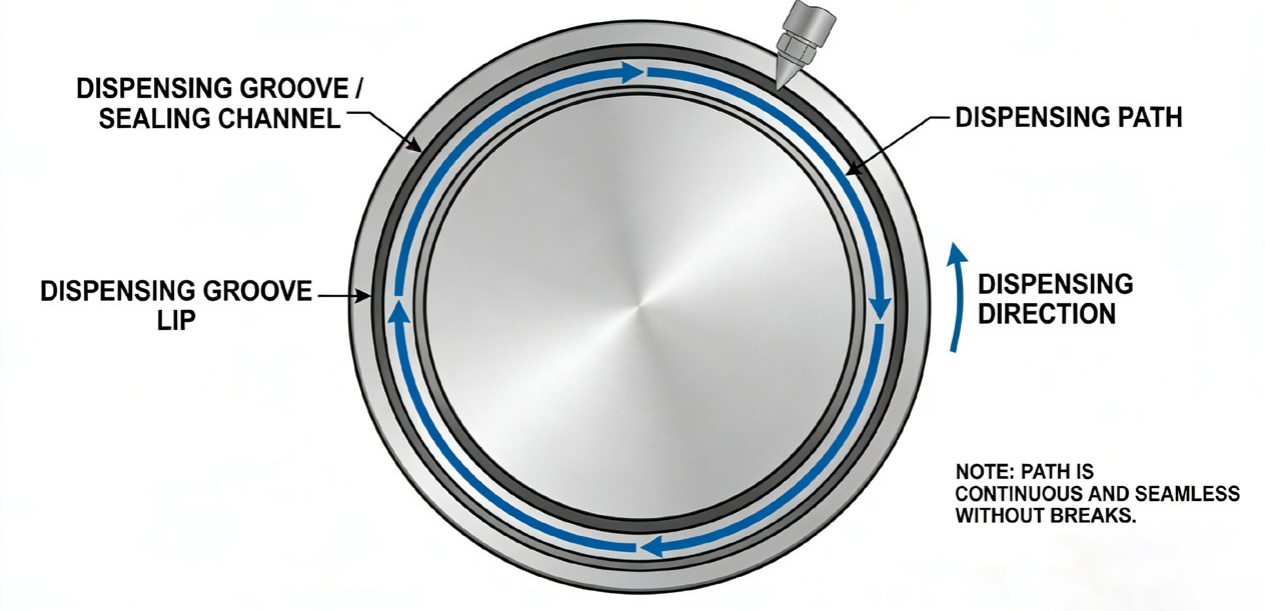
Foam-in-place sealing forms a continuous closed-loop gasket directly inside the metal lid groove. It removes the ring joint and allows the bead path, width and height to follow the lid design. The decision between one-component PVC and two-component PU is mainly a process decision: available curing equipment, required production rate, component handling, cleaning method and final gasket performance must be considered together.
A stable FIP line depends on more than compound selection. Groove cleanliness, dispensing speed, material temperature, bead overlap and curing or reaction time all affect cellular structure and compression. The compound and machine should therefore be approved as one process using the customer lid, not as two unrelated purchases.
| Selection point | 1K PVC foam-in-place | 2K PU foam-in-place |
|---|---|---|
| Material supply | Premixed one-component plastisol | Separate polyol and isocyanate components |
| Gasket formation | Metered bead dispensed continuously into the lid groove | Metered components dynamically mixed and dispensed into the groove |
| Curing method | Controlled oven cure after dispensing | Room-temperature reaction without an oven |
| Best fit | High-volume metal lid lines with an available curing process | Industrial lids or enclosures requiring flexible path control and room-temperature cure |
| Matched equipment | PVC one-component dispensing machine | PU two-component dispensing machine |
Reference data for one-component PVC
The following values come from the available Jinyu technical sheet and are useful for initial process planning. The approved value remains the batch specification supplied with the selected grade.
| PVC property | Catalog reference |
|---|---|
| Appearance | Light yellow to off-white viscous liquid; custom color available |
| Liquid density | 1.15-1.25 g/ml at 25 °C |
| Viscosity | 2,200 +/- 700 mPa.s at 25 °C |
| Foamed density | 0.55-0.75 g/cm3, depending on the baking profile |
| Typical curing window | 190-210 °C metal-cap temperature for approximately 3-5 minutes |
| Shelf life | 9 months in unopened original packaging |
Production validation points
Confirm the lid locating method, dispensing path, start-stop overlap, bead dimensions and curing profile before setting line speed. For PU, also verify the mixing ratio, component conditioning and cleaning cycle. Finished lids should be checked for bead continuity, adhesion, compression and leakage after the required conditioning period.
FOAM-IN-PLACE FAQ
Questions for a new dispensing project
What is the main difference between 1K PVC and 2K PU gasket systems?
One-component PVC is dispensed as a premixed material and normally requires a controlled oven cure. Two-component PU is metered and mixed at the machine and reacts at room temperature.
Can the compound be selected without checking the dispensing machine?
It is not recommended. Viscosity, output range, bead size, curing method, mixing ratio and cleaning process connect the material directly to the equipment and line speed.
What should be tested on a foam-in-place gasket?
Check bead continuity, dimensions, adhesion, cellular structure, compression, leakage and compatibility with the filled medium after the specified conditioning period.

Reviews
There are no reviews yet.