SEALING EQUIPMENT
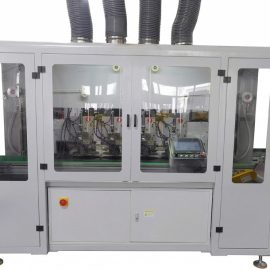
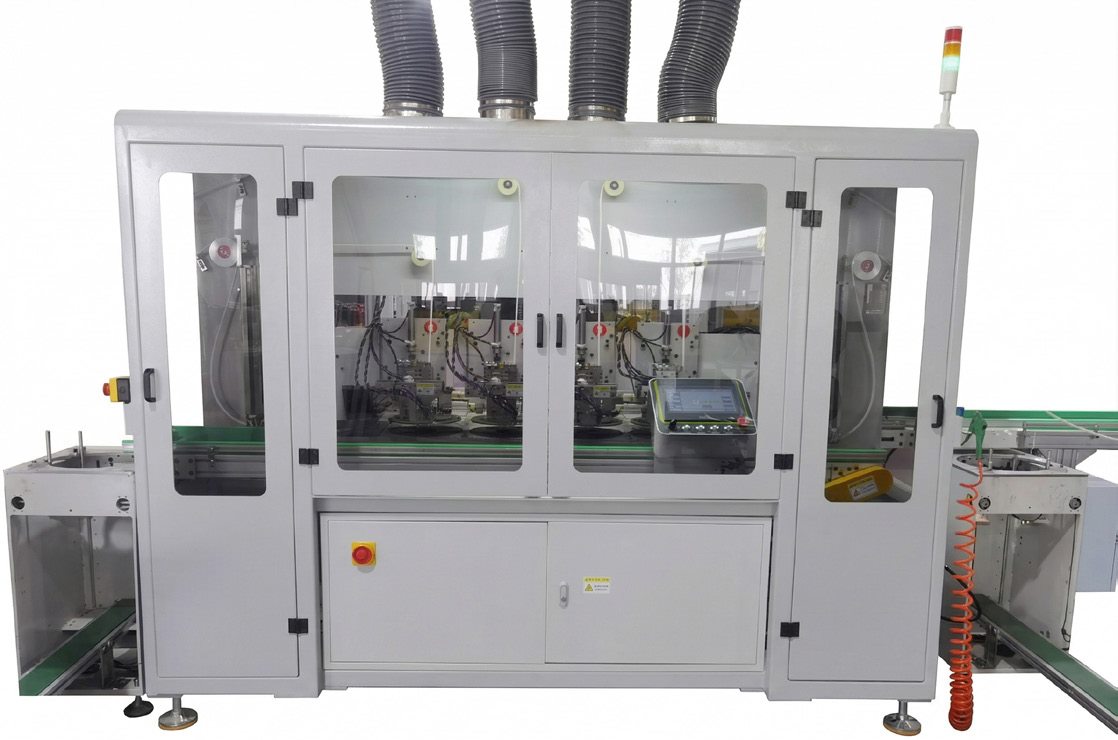
EVA automatic gasket lining machine
Pre-formed strip feeding, groove insertion, hot-knife cutting and heat-welded joining.
REFERENCE SPECIFICATION
Configuration matched to lid and line
| Item | Reference |
|---|---|
| Process | Unwind, insert, cut and heat-weld |
| Stations | Single-station configurations are available. One machine can have up to six stations. For higher production targets, Jinyu typically integrates two or three machines. |
| Single-station output | Approximately 10–15 lids per minute for a 285 mm diameter lid. Output generally decreases as lid diameter increases. Confirm the rate with production lids. |
| Shared lid setup | Some lid types can share a setup when the lid diameter and groove width are nearly identical and the same EVA gasket strip is used. Check fit and sealing with representative samples. |
| Adhesive option | Optional inline spot dispensing helps hold the ring in the groove during handling. |
| Control | PLC and touchscreen recipes |
| Power supply | Voltage and frequency can be customized to match the power supply at your site. |
| Remote service | A smart remote-support module lets Jinyu assist with commissioning, fault diagnosis and repair. |
| Machine guarding | A protective enclosure around the operating area helps limit operator access to moving parts during operation. |
| Fume extraction provision | A connection point is provided for local exhaust at the hot-melt bonding station, where a small amount of fumes may be released. |
| Curing | No gasket-curing oven for pre-formed EVA. If adhesive is used, verify its set time for handling. |
PROCESS AND INTEGRATION
From EVA roll stock to a closed gasket ring
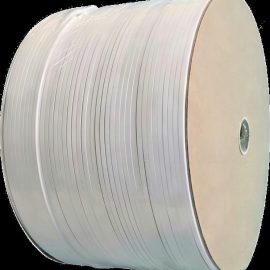
The EVA machine uses a continuous pre-formed strip as the gasket material. Stable production requires the strip width and thickness to match the lid groove, controlled feeding tension, repeatable cut length and a clean heat-welded joint. Multi-head configurations can be discussed after the lid range and required output are confirmed.
Before configuration, provide lid samples, groove drawings, EVA roll dimensions, line direction and the required cycle time. The acceptance test should check ring position, joint strength, dimensions and leakage after closing the lid.
Automatic EVA gasket lining machine overview
See how the machine feeds EVA strip, forms the gasket ring and handles metal pail and drum lids.
Synchronized adhesive dispensing and EVA gasket lining
A close-up shows adhesive dispensing and EVA strip placement in the lid groove during the same pass.
MACHINE CONFIGURATION
Define the EVA machine from the lid, strip and target output
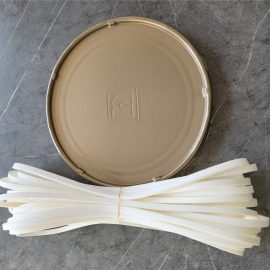
The automatic EVA gasket lining machine converts continuous profiled strip into a closed ring inside the lid groove. A production cycle covers controlled feeding, placement, length control, cutting and heat-welded joining. The pre-formed strip needs no chemical foaming or gasket-curing oven during lining.
Configuration begins with representative lids and production EVA rolls. The number of heads, lid handling, recipe range and line interfaces are selected only after the groove, strip tolerances and required output are confirmed.
| Sealing material | Pre-formed EVA strip roll stock |
|---|---|
| Core operations | Feed, insert, cut and heat-weld the joint |
| Curing oven | Not required |
| Configuration inputs | Lid range, groove, strip section, output and line direction |
| Acceptance focus | Ring position, joint strength, cycle repeatability and leakage |
Optional inline adhesive dispensing
The machine can dispense adhesive into the lid groove during the same pass that lays the EVA strip. This helps keep the gasket seated and reduces the chance of the ring coming loose during lid handling. Jinyu recommends RC1875, a fast-drying, acrylic-modified adhesive with rust-inhibiting properties, for trials with this option. Check adhesion, set time and handling requirements with the actual lid coating and EVA strip before production.
Request the current RC1875 safety data sheet and confirm the ventilation and handling controls before using the adhesive.
Pre-formed EVA vs. PVC and PU foam-in-place
The machine installs EVA strip that has already been foamed. The lining operation needs no on-lid chemical foaming or gasket-curing oven. In comparison with oven-cured PVC, this removes the oven-heating step and its associated source of volatile emissions from the lining operation. Optional adhesive handling still requires the controls specified for the adhesive.
For comparable production targets, the shorter EVA process can improve line efficiency, take up less floor space and reduce equipment costs compared with PVC or PU foam-in-place. Single-station and integrated multi-machine layouts give buyers flexibility to match the setup to lid size, target output and available floor space.
Approval before production
The values above are selection references, not a release specification. Final dimensions and performance must be confirmed with the actual lid, closing process and filled medium.