2K PU COMPOUND
PU foam-in-place sealing compound
PUR WM-1575 is a two-component polyurethane foam-in-place gasket compound for metal lids, electrical cabinet doors and new-energy battery enclosures. Polyol and MDI components are metered and mixed on demand, then react at room temperature; confirm the programmed gasket path, adhesion and compatibility with the actual application.
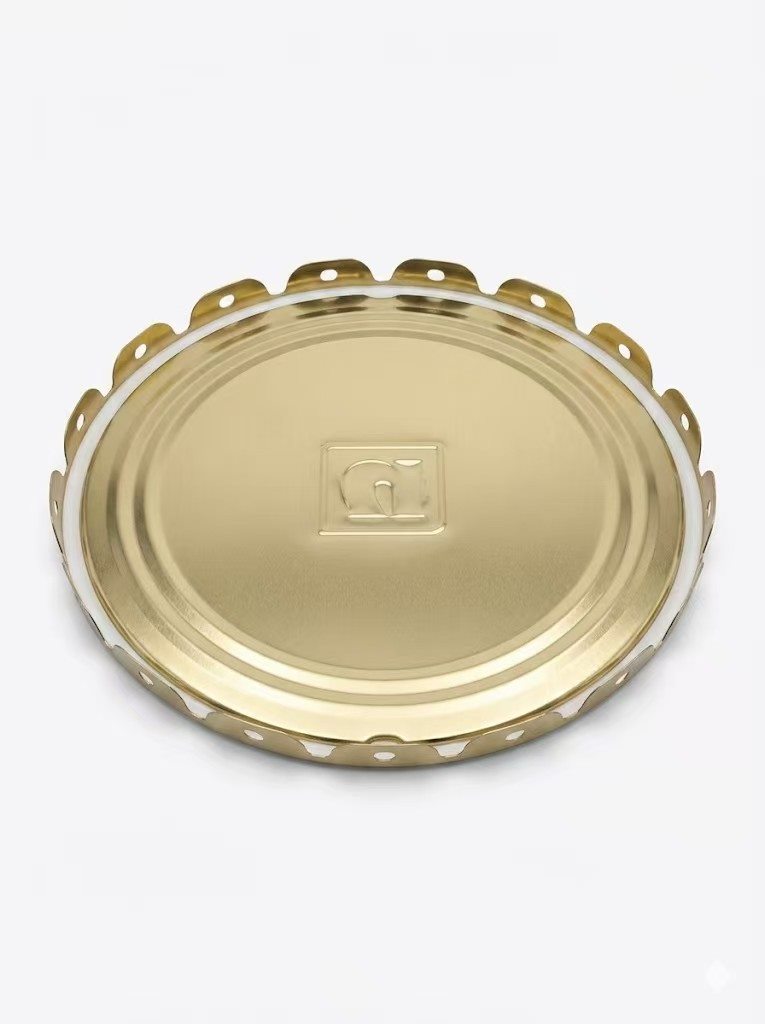
2K PU gasket selection by application
Compare the surfaces and closing conditions before specifying the bead. Use parts with the production finish and check the complete assembly with the proposed gasket.
| Application | Substrate and finish | Cured bead cross-section | Compression check | Leak check |
|---|---|---|---|---|
| Chemical pail and drum lids | Record the lid metal, such as tinplate, and the coating or bare finish inside the groove. Check adhesion on that sealing surface. | Fit the cured width and height to the lid groove. Inspect the closed loop and the start-stop overlap for gaps or excess height. | Compare free bead height with the closed clearance. Check seating and contact around the rim with the intended lid and closure. | Test the closed pail or drum with the intended fill or an agreed substitute. Record the method, orientation, duration and any leak at the rim or bead joint. |
| Electrical cabinet doors | Record the door and frame material and finish, such as powder-coated steel where used. Check adhesion on the actual door or frame. | Match bead width and height to the sealing land and door clearance. Check the perimeter bead at corners and at the start-stop joint. | Compare bead height with the latched gap. Check contact at the hinges, latch points and corners with the intended hardware. | Test the latched cabinet using the agreed ingress method for its intended service. Inspect the door perimeter, corners and hardware areas for ingress. |
| New-energy battery enclosures | Record both flange materials, such as aluminum or coated steel where used, and their surface treatments. Verify adhesion on the dispensed side. | Fit the cured width and height to the flange and available gap. Check continuity through corners, steps and routing near fasteners. | Check the assembled gap with the specified fastening sequence and torque. Verify contact between fasteners and check for local overcompression. | Leak-test the assembled housing and cover with openings configured as the test plan specifies. Record the method, conditions and any leak location. |
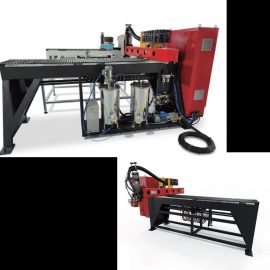
For equipment and programmed bead placement, see the 2K PU dispensing machine for these applications.
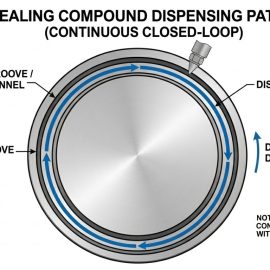
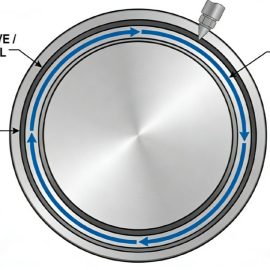
Actual 2K PU dispensing on a large round metal lid
See the dispensing head follow the lid groove and apply a continuous bead of two-component PU compound.
Record the approved process and trial results
Request the technical data sheet for the supplied A and B components. Fill in the approved settings and measured results for your own trial.
- A:B mix ratio
- Record the approved ratio and whether it is by mass or volume.
- Cure and conditioning
- Record approved component and ambient conditions, cure time and conditioning before testing.
- Measured trial results
- Record the bead dimensions, closed gap, compression and leak test results for the actual assembly.
FOAM-IN-PLACE MATERIAL
2K PU compound for room-temperature gasket formation
Two-component PU forms a gasket when separately conditioned components are accurately metered, dynamically mixed and dispensed along the programmed path. The material reacts at room temperature, so the process does not depend on a PVC curing oven.
Stable output requires controlled component temperature, the approved mixing ratio, repeatable metering and a defined cleaning cycle. The final bead should be checked after the specified reaction and conditioning period for continuity, adhesion, cell structure and compression.
Approval before production
Confirm the final bead dimensions and seal performance on the production assembly under its intended service conditions.