
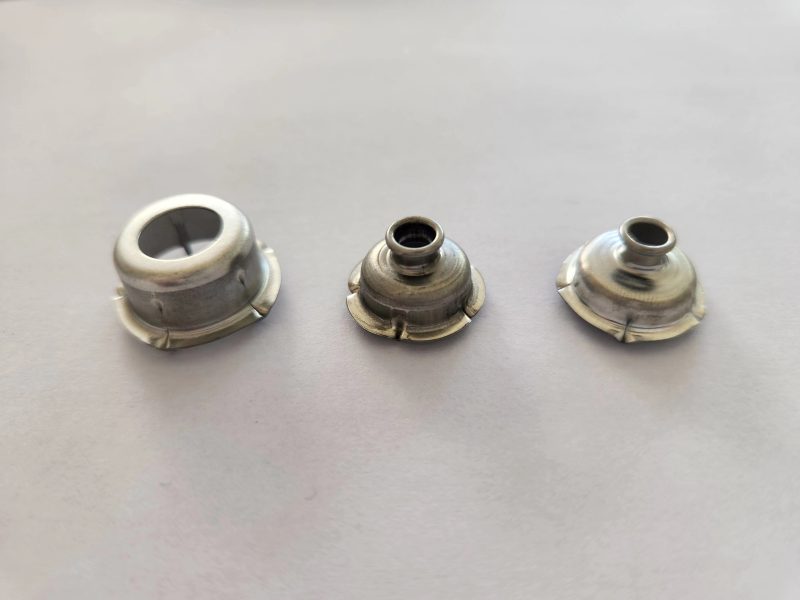
Material Characteristics of Industrial-Grade Rubber Gaskets for Paint Buckets
Industrial-grade rubber has become a cornerstone material for paint bucket sealing solutions due to its versatility, cost-effectiveness, and adaptability to demanding manufacturing environments. These specialized gaskets balance chemical resistance with mechanical durability to ensure reliable performance across diverse paint formulations and storage conditions.
Chemical Resistance and Formulation Compatibility
The primary consideration for industrial rubber gaskets in paint applications is their ability to withstand aggressive chemical exposure. Nitrile rubber (NBR) stands out for its excellent resistance to petroleum-based solvents, aliphatic hydrocarbons, and mineral oils commonly found in solvent-borne paints. This material maintains dimensional stability when exposed to these chemicals, preventing swelling or shrinkage that could compromise sealing integrity.
For water-based paint formulations, ethylene propylene diene monomer (EPDM) rubber offers superior performance. Its hydrophobic nature resists water absorption while maintaining flexibility in humid environments. EPDM’s resistance to alkaline cleaning solutions also makes it suitable for applications requiring frequent container sanitization between batches.
Chloroprene rubber (CR) provides a balanced solution for mixed chemical environments. This material combines moderate resistance to oils with excellent weathering properties, making it valuable for outdoor paint storage applications. Its ozone resistance prevents surface cracking during prolonged exposure to sunlight and industrial atmospheres.
Mechanical Durability and Sealing Performance
Industrial rubber gaskets must withstand the mechanical stresses of automated filling lines and transportation. Natural rubber compounds, when properly vulcanized, offer exceptional tear strength and abrasion resistance. These properties prevent damage during container handling while maintaining sufficient elasticity to conform to irregular sealing surfaces.
The compression set resistance of industrial rubber determines long-term sealing effectiveness. High-quality formulations maintain their rebound characteristics after thousands of compression cycles, ensuring consistent sealing pressure throughout the product lifecycle. This property reduces the need for frequent gasket replacement in high-volume production environments.
Rubber hardness plays a critical role in sealing performance. Shore A durometer values between 60-80 provide optimal balance between flexibility and compression force. Softer compounds conform better to surface imperfections, while harder formulations offer greater resistance to extrusion under high internal pressures.
Thermal Stability and Environmental Adaptability
Temperature extremes present significant challenges for paint bucket sealing systems. Silicone-modified rubber compounds extend the operational temperature range beyond traditional elastomers. These blends maintain flexibility at temperatures as low as -40°C while resisting deformation at temperatures exceeding 150°C, supporting both cold chain logistics and hot-fill processes.
UV resistance becomes crucial for outdoor paint storage applications. Carbon black-filled rubber formulations offer effective protection against ultraviolet degradation, preventing surface cracking and loss of elasticity. This property extends gasket service life in environments exposed to direct sunlight or fluorescent lighting.
Ozone resistance prevents premature aging in industrial settings where electrical equipment generates ozone. Specialized rubber compounds containing anti-ozonants maintain their physical properties even when stored near motors, compressors, or other ozone-producing equipment.
Process Compatibility and Manufacturing Efficiency
Industrial rubber gaskets must integrate seamlessly with existing manufacturing processes. Liquid injection molding technology enables precise control over gasket dimensions and wall thickness, ensuring consistent sealing performance across large production runs. This method also reduces material waste compared to traditional compression molding techniques.
The material’s flow characteristics during molding influence part quality and production speed. Optimized rubber compounds fill complex mold cavities without creating voids or flash, reducing post-molding trimming requirements. This efficiency supports high-volume manufacturing while maintaining tight dimensional tolerances.
Surface finish plays a role in both functionality and aesthetics. Smooth gasket surfaces minimize paint adhesion during container cleaning, while textured finishes can improve grip during manual handling. Manufacturers can tailor surface characteristics to specific application requirements without compromising sealing performance.
Sustainability and End-of-Life Considerations
Modern industrial rubber formulations increasingly incorporate recycled materials without sacrificing performance. Post-consumer rubber waste can be reprocessed into new gasket compounds, reducing environmental impact while maintaining mechanical properties. This circular economy approach aligns with corporate sustainability goals in the paint industry.
The long service life of industrial rubber gaskets contributes to waste reduction. Their durability minimizes the frequency of replacements, lowering the total material consumption over the container’s lifecycle. When disposal becomes necessary, rubber can be ground into reusable crumb for applications like playground surfaces or automotive parts.
Energy-efficient manufacturing processes further enhance the environmental profile of these gaskets. Advances in vulcanization technology reduce curing times and energy consumption, while water-based mold release agents minimize chemical waste during production. These improvements support the paint industry’s movement toward greener manufacturing practices.