
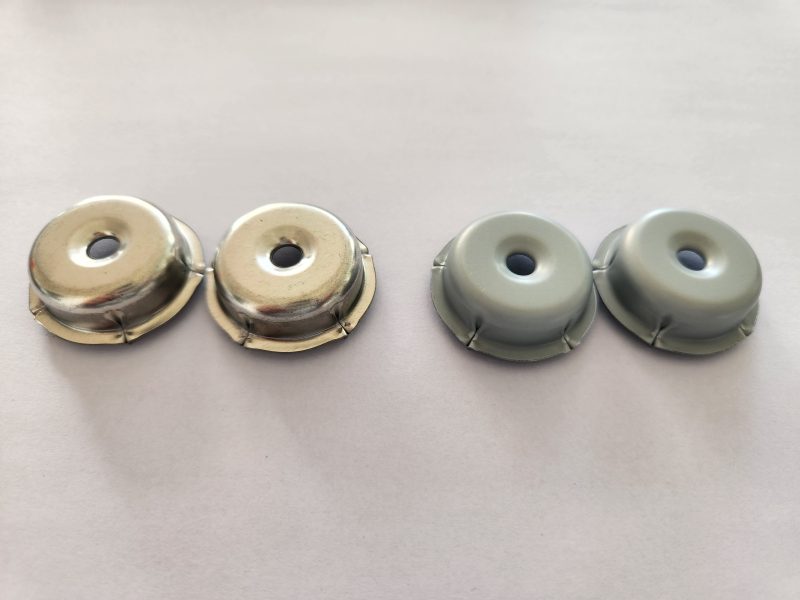
High-Performance Fluororubber Materials for Corrosion-Resistant Paint Bucket Gaskets
Understanding the Chemical Resistance Requirements for Paint Storage
Paint formulations often contain aggressive chemicals such as strong acids, organic solvents, and oxidizing agents. These substances demand gaskets capable of maintaining integrity under prolonged exposure. Traditional rubber materials like nitrile or neoprene frequently fail in such environments, experiencing swelling rates exceeding 30% within weeks when exposed to pH <1 acids. This degradation compromises sealing performance and increases maintenance costs.
Fluororubber compounds demonstrate superior resistance to chemical attack due to their high fluorine content (typically 66-70%). The carbon-fluorine bond strength creates a molecular structure that resists hydrolysis and oxidation, making these materials ideal for storing industrial-grade paints containing concentrated sulfuric acid, hydrochloric acid, or aromatic hydrocarbons.
Thermal Stability for Hot-Fill Processes
Many paint manufacturing processes involve hot-filling containers at temperatures exceeding 150°C. Standard elastomers lose elasticity above 120°C, but specialized fluororubber grades maintain mechanical properties up to 250°C continuous exposure and 300°C intermittent use. This thermal resilience prevents deformation during rapid cooling cycles common in automated production lines.
The crosslinking density in fluororubber formulations significantly impacts high-temperature performance. Peroxide-cured compounds exhibit lower compression set values compared to amine-cured variants, maintaining sealing force after thousands of thermal cycles. Some advanced formulations incorporate ceramic microspheres to enhance dimensional stability under extreme temperature gradients.
Material Selection Criteria for Specific Corrosive Media
Acidic Environments
For paints containing strong inorganic acids, fluororubber with fluorine content above 68% provides optimal protection. These materials resist penetration by aggressive ions while maintaining flexibility at low temperatures (-40°C to -60°C depending on formulation). The addition of carbon black fillers improves abrasion resistance without compromising chemical compatibility.
Organic Solvent Resistance
Paint thinners and solvent-borne coatings require gaskets immune to swelling from ketones, esters, and aromatic hydrocarbons. Fluororubber modified with perfluoroalkyl ether segments demonstrates exceptional solvent resistance, with volume change rates below 5% after 72-hour immersion tests. This property ensures consistent sealing in storage tanks handling xylene or toluene-based formulations.
Oxidative Stability
Paints containing peroxides or strong oxidizing agents necessitate materials resistant to chain scission reactions. Fluororubber with high crosslink density and antioxidant additives maintains tensile strength above 10 MPa after prolonged exposure to 30% hydrogen peroxide solutions. This durability prevents premature failure in bleach-based whitening paint formulations.
Advanced Formulation Considerations
Modern fluororubber compounds balance chemical resistance with physical properties through precise control of filler systems. Reducing inorganic filler content while increasing fluorine levels enhances corrosion protection but may reduce tear strength. Manufacturers optimize these parameters by incorporating nano-scale silica particles that improve reinforcement without creating permeation pathways.
For applications requiring both chemical resistance and electrical insulation, fluororubber blends with polyimide fibers offer dielectric strength exceeding 20 kV/mm while maintaining compatibility with corrosive media. This dual functionality benefits paint storage systems incorporating static dissipation requirements.
Application-Specific Design Features
Gasket geometry plays a crucial role in sealing effectiveness. Contoured designs that match paint bucket lid profiles distribute compression forces evenly, preventing stress concentrations that lead to chemical ingress. Some formulations incorporate self-lubricating additives to reduce friction during lid removal, extending service life in high-cycle applications.
Thickness optimization balances sealing performance with material efficiency. While standard 2mm gaskets suit most applications, thin-wall designs (1.5mm) reduce material costs without compromising performance when paired with high-compression flange designs. For extreme pressure applications, reinforced gaskets with embedded stainless steel mesh provide additional structural integrity.
Maintenance and Longevity Factors
Proper installation techniques significantly impact gasket lifespan. Over-tightening flanges creates permanent deformation, while insufficient compression allows chemical permeation. Training personnel in torque specification compliance extends service intervals and reduces product waste.
Storage conditions also affect material performance. Fluororubber gaskets should remain in sealed packaging away from UV exposure and ozone sources. Periodic inspection for surface cracks or discoloration helps identify early degradation signs in critical paint storage systems.