
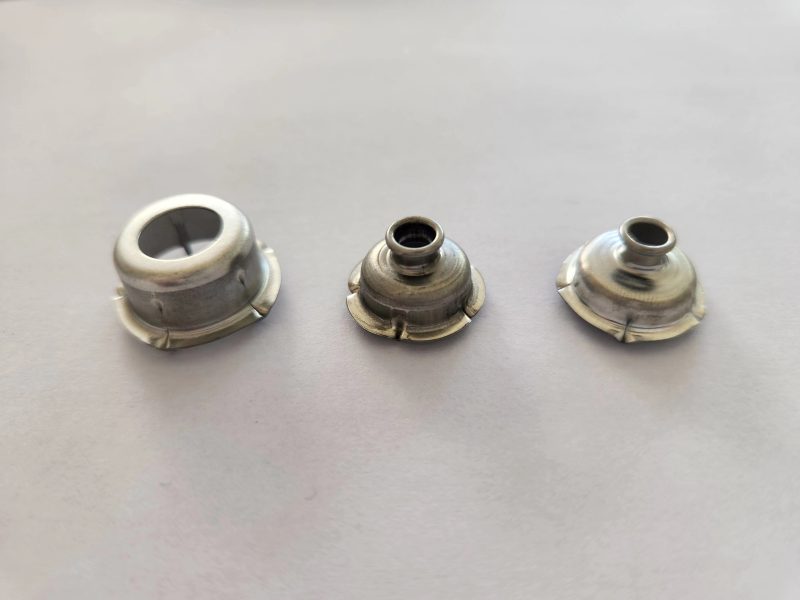
Precise Size Parameters for Narrow-Edge Paint Bucket Gaskets
When working with narrow-edge paint buckets, selecting the right gasket is essential for creating a reliable seal that prevents leaks and maintains product integrity. These containers, often used for specialized coatings or small-batch storage, require gaskets designed to fit their unique dimensions and operational demands. Below, we explore the critical size parameters for narrow-edge gaskets, ensuring compatibility and performance in various applications.
Inner Diameter: Matching the Bucket’s Opening
The inner diameter (ID) of a narrow-edge gasket must align precisely with the bucket’s opening to ensure a secure fit. Unlike standard gaskets, narrow-edge designs often have a smaller ID relative to the outer dimensions, as they’re optimized for containers with limited rim space.
- Precision tolerance: For narrow-edge buckets, the gasket’s ID should typically be within 0.5mm of the bucket’s opening. This tight tolerance prevents gaps that could lead to leaks, especially in containers holding low-viscosity paints or solvents.
- Material flexibility: Soft materials like silicone or nitrile rubber can tolerate a slightly smaller ID (e.g., 0.3mm less than the opening), as they compress to fill gaps without losing their seal. This flexibility is useful for irregularly shaped openings or containers subjected to vibration.
- Rigid materials: If using reinforced plastics or hard rubber, the ID must match the bucket’s opening exactly (within 0.2mm) to avoid overstressing the material, which could lead to cracking or premature failure.
For example, if the bucket’s opening measures 20cm, a flexible gasket might have an ID of 19.97cm, while a rigid one would need an ID closer to 20cm.
Outer Diameter: Fitting Within the Narrow Rim
The outer diameter (OD) of a narrow-edge gasket is constrained by the bucket’s rim width, which is typically smaller than standard containers. This requires a gasket designed to sit flush within the rim without overhanging or creating pressure points.
- Flat-ring designs: These sit directly on the rim’s surface, requiring an OD that matches the rim’s width precisely. If the rim measures 22cm, the gasket’s OD should be within 0.3mm of this measurement to ensure full contact and a tight seal.
- Contoured or recessed gaskets: These may have an OD slightly smaller than the rim (e.g., 21.9cm for a 22cm rim) to account for the gasket’s shape and ensure it fits snugly without protruding. Contoured designs are often used for containers with non-standard rim profiles or limited space.
- Beveled edges: Some narrow-edge gaskets feature beveled edges to reduce friction and improve sealing performance. The OD in these cases must account for the bevel’s angle, ensuring the gasket fits securely without compromising the seal.
A proper OD ensures the gasket stays in place during use, reducing the risk of slippage or misalignment, which is critical for narrow-edge containers handling specialized coatings.
Thickness: Balancing Seal Integrity and Rim Space
The thickness of a narrow-edge gasket is a delicate balance between providing enough material to create a reliable seal and avoiding excessive bulk that could interfere with the bucket’s design. Common thicknesses range from 2mm to 8mm, depending on the application.
- Thin gaskets (2mm–4mm): Ideal for lightweight containers or paints with low viscosity, as they offer flexibility without adding significant height to the rim. However, they may not withstand high pressure or repeated use as well as thicker options.
- Medium-thickness gaskets (5mm–6mm): Provide a balance of flexibility and durability, suitable for most narrow-edge paint buckets handling standard coatings or adhesives. These are often used in general industrial or laboratory applications.
- Thick gaskets (7mm–8mm): Offer enhanced resistance to compression and wear, making them ideal for heavy-duty paints, aggressive chemicals, or containers subjected to frequent handling or vibration. Thick gaskets are common in automotive or aerospace coatings.
Choosing the right thickness depends on the paint’s properties, the container’s intended use, and the operating environment. For example, a container holding high-viscosity paint under pressure may require a thicker gasket to maintain its seal over time.
Edge Profile: Optimizing for Narrow Spaces
The edge profile of a narrow-edge gasket plays a crucial role in its ability to fit within the bucket’s rim and create an effective seal. Common edge profiles include:
- Square edges: Simple and straightforward, square-edged gaskets are easy to manufacture and fit well in containers with straight, uniform rims. However, they may not seal as effectively in containers with irregular or rounded rims.
- Rounded edges: These conform better to curved or irregular rims, reducing the risk of gaps and improving sealing performance. Rounded edges are often used in containers designed for handheld use or those with ergonomic designs.
- Beveled edges: Beveled gaskets feature an angled edge that reduces friction and improves seating within the rim. This design is particularly useful for containers subjected to vibration or frequent movement, as it helps the gasket stay in place.
- Recessed profiles: Some narrow-edge gaskets are designed to sit partially recessed within the rim, providing additional stability and reducing the risk of dislodgement. Recessed profiles are common in high-security or high-pressure applications.
Selecting the right edge profile depends on the bucket’s design and the specific demands of the application. For example, a container with a rounded rim may require a gasket with rounded edges to ensure a proper seal.
Application-Specific Adjustments for Narrow-Edge Gaskets
Different paint bucket designs and usage scenarios may require adjustments to the gasket’s size parameters:
- High-pressure storage: If the bucket will hold paint under significant pressure (e.g., in hydraulic systems or industrial mixers), a thicker gasket (6mm–8mm) with a higher compression ratio ensures a leak-proof seal. Additionally, the gasket’s material should be resistant to deformation under pressure.
- Chemical exposure: For paints containing aggressive solvents, acids, or bases, choose a material like fluorocarbon rubber (FKM) or nitrile rubber that won’t degrade over time. Chemical-resistant gaskets are critical in pharmaceutical or chemical processing applications.
- Outdoor or extreme environments: UV-resistant materials like silicone or EPDM help prevent degradation from sunlight, ozone, or temperature fluctuations, extending the gasket’s lifespan. Outdoor storage containers often require gaskets with enhanced environmental resistance.
- Ergonomic designs: Containers designed for handheld use may require thinner gaskets (3mm–5mm) to maintain a comfortable grip and reduce weight. In these cases, the gasket’s edge profile should also be optimized for ease of use.
By tailoring the gasket’s dimensions and edge profile to the specific application, you can ensure optimal performance and longevity, even in challenging environments.
Common Pitfalls to Avoid When Selecting Narrow-Edge Gaskets
- Ignoring rim width: A gasket with an OD larger than the rim will not fit properly, leading to leaks or difficulty closing the bucket. Always measure the rim’s width accurately before selecting a gasket.
- Using the wrong thickness: A gasket that’s too thin may not withstand pressure or repeated use, while one that’s too thick could interfere with the bucket’s design or make it difficult to close. Select a thickness based on the application’s demands.
- Overlooking material compatibility: A gasket designed for water-based applications may fail when exposed to oil-based paints or solvents, even if the dimensions are correct. Always match the material to the paint’s chemical properties to avoid premature failure.
- Neglecting edge profile: The wrong edge profile can prevent the gasket from seating properly within the rim, leading to leaks or instability. Choose an edge profile that matches the bucket’s design and usage scenario.
By focusing on inner and outer diameter accuracy, thickness, edge profile, and material compatibility, you can select a narrow-edge gasket that ensures a reliable, leak-proof seal for your paint bucket, even in the most demanding industrial or storage environments.