
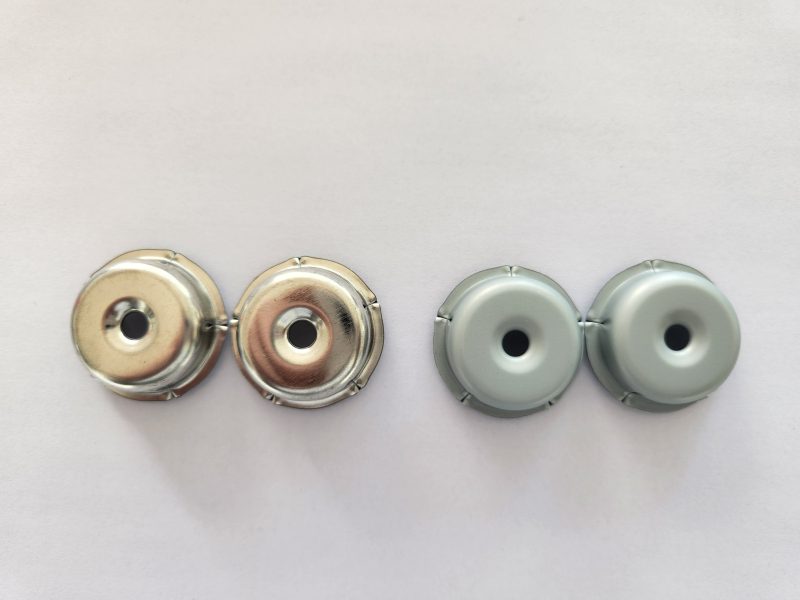
Key Specifications for Large-Diameter Paint Bucket Gaskets
When dealing with large-diameter paint buckets, selecting the right gasket is crucial for maintaining a secure, leak-proof seal. These containers, often used in industrial settings or for bulk storage, require gaskets that can withstand high pressure, chemical exposure, and mechanical stress. Below, we explore the essential specifications for large-diameter gaskets, ensuring optimal performance in demanding environments.
Inner Diameter: Precision for Large-Scale Sealing
The inner diameter (ID) of a large-diameter gasket must align precisely with the bucket’s opening to prevent leaks or improper seating. For containers with diameters exceeding 30cm, even minor discrepancies can lead to significant sealing issues.
- Flexible materials (e.g., industrial-grade silicone or soft rubber): These can tolerate an ID slightly smaller than the bucket’s opening (e.g., 1mm–2mm less), as the material will compress to fill gaps without losing its seal. This flexibility is especially useful for containers with irregular openings or those subjected to vibration.
- Rigid materials (e.g., reinforced plastics or hard rubber): Require an ID that matches the bucket’s opening within 0.5mm to ensure a snug fit without overstressing the material. Rigid gaskets are ideal for high-pressure applications where minimal deformation is critical.
For example, if the bucket’s opening measures 40cm, a flexible gasket might have an ID of 39.8cm, while a rigid one would need an ID closer to 40cm.
Outer Diameter: Ensuring Full Rim Coverage
The outer diameter (OD) of a large-diameter gasket must cover the bucket’s rim completely to prevent leaks at the edges. This is particularly important for containers subjected to heavy loads, vibration, or temperature fluctuations, as gaps can lead to premature failure.
- Flat-ring gaskets: These sit between the bucket and lid, requiring an OD that matches the lid’s sealing surface precisely. If the lid’s outer edge measures 45cm, the gasket’s OD should be within 1mm of this measurement to ensure full contact and a tight seal.
- Contoured or beveled gaskets: These may have an OD slightly larger than the rim (e.g., 45.2cm for a 45cm rim) to account for the gasket’s shape and ensure a secure fit under pressure. Contoured designs are often used for containers with non-standard rim profiles.
A proper OD ensures the gasket stays in place during use, reducing the risk of slippage or misalignment, which is critical for large-diameter containers handling bulk materials.
Thickness: Balancing Durability and Compression Resistance
The thickness of a large-diameter gasket affects its ability to withstand compression, chemical exposure, and mechanical stress over time. Common thicknesses range from 5mm to 15mm, depending on the application.
- Thin gaskets (5mm–7mm): Ideal for lightweight containers or paints with low viscosity, as they offer flexibility without adding excessive bulk. However, they may not withstand high pressure or repeated use as well as thicker options.
- Medium-thickness gaskets (8mm–10mm): Provide a balance of flexibility and durability, suitable for most large-diameter paint buckets handling standard coatings or adhesives. These are often used in general industrial applications.
- Thick gaskets (12mm–15mm): Offer enhanced resistance to compression and wear, making them ideal for heavy-duty paints, aggressive chemicals, or containers subjected to frequent handling or vibration. Thick gaskets are common in chemical processing or automotive paint storage.
Choosing the right thickness depends on the paint’s properties, the container’s intended use, and the operating environment.
Material Selection: Enhancing Chemical and Environmental Resistance
The gasket’s material must resist the paint’s chemical composition, temperature extremes, and mechanical stress. Common materials for large-diameter gaskets include:
- Silicone: Offers excellent flexibility, temperature resistance (-70°C to 300°C), and chemical inertness, making it suitable for a wide range of paints and storage conditions. Silicone is often used in food-grade or pharmaceutical applications due to its purity.
- Fluorocarbon rubber (FKM): Provides exceptional resistance to chemicals, oils, and high temperatures, making it ideal for specialized paints or harsh industrial settings. FKM is commonly used in automotive or aerospace coatings.
- Nitrile rubber: Resistant to oils, fuels, and many solvents, this material is perfect for paints containing petroleum-based components or aggressive chemicals. Nitrile is often used in industrial maintenance or construction applications.
- EPDM rubber: Combines strong resistance to water, steam, and UV exposure with durability, making it suitable for outdoor storage or applications involving moisture-sensitive paints. EPDM is commonly used in agricultural or marine coatings.
Selecting the right material ensures the gasket maintains its sealing properties over time, even in challenging environments.
Application-Specific Adjustments for Large-Diameter Gaskets
Different paint bucket designs and usage scenarios may require adjustments to the gasket’s specifications:
- High-pressure storage: If the bucket will hold paint under significant pressure (e.g., in hydraulic systems or industrial mixers), a thicker gasket (10mm–15mm) with a higher compression ratio ensures a leak-proof seal.
- Chemical exposure: For paints containing aggressive solvents, acids, or bases, choose a material like FKM or nitrile rubber that won’t degrade over time. Chemical-resistant gaskets are critical in pharmaceutical or chemical processing applications.
- Outdoor or extreme environments: UV-resistant materials like silicone or EPDM help prevent degradation from sunlight, ozone, or temperature fluctuations, extending the gasket’s lifespan. Outdoor storage containers often require gaskets with enhanced environmental resistance.
By tailoring the gasket’s dimensions and material to the specific application, you can ensure optimal performance and longevity.
Common Mistakes to Avoid When Choosing Large-Diameter Gaskets
- Using the wrong material: A gasket designed for water-based applications may fail when exposed to oil-based paints or solvents, even if the dimensions are correct. Always match the material to the paint’s chemical properties to avoid premature failure.
- Ignoring thickness requirements: A gasket that’s too thin may not withstand pressure or repeated use, while one that’s too thick may not conform properly to the bucket’s shape, leading to leaks. Select a thickness based on the application’s demands.
- Reusing worn gaskets: Over time, gaskets lose elasticity and compressibility, making them less effective at preventing leaks. Replace them periodically, especially in critical applications or those involving aggressive chemicals.
By focusing on inner and outer diameter accuracy, material compatibility, and thickness, you can select a large-diameter gasket that ensures a reliable, leak-proof seal for your paint bucket, even in the most demanding industrial or storage environments.