
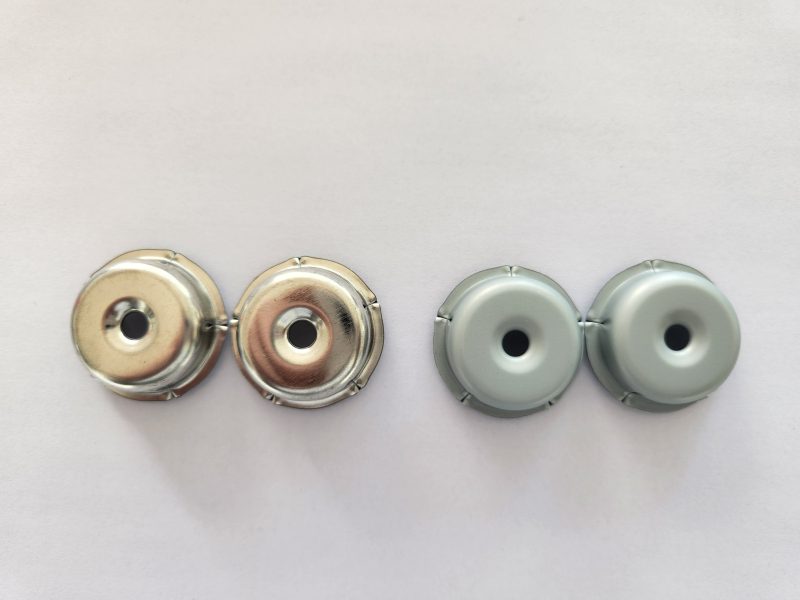
Selecting the Right Dimensions for 5mm Thick Paint Bucket Gaskets
When upgrading to a 5mm thick gasket for your paint bucket, precision in sizing becomes even more critical. This increased thickness offers enhanced durability and sealing performance, especially for containers handling heavy-duty paints or those exposed to harsh conditions. Below, we break down the essential factors to consider when choosing a 5mm thick gasket.
Inner Diameter: Matching the Bucket’s Opening with Extra Thickness in Mind
The inner diameter (ID) of a 5mm thick gasket must account for both the bucket’s opening and the material’s compression under pressure. Unlike thinner gaskets, a 5mm thickness requires slightly more precise measurements to ensure a proper fit without over-compression or gaps.
- Flexible materials (e.g., silicone or rubber): These can tolerate an ID that’s 0.2cm–0.4cm smaller than the bucket’s opening, as the 5mm thickness provides enough material to compress and fill minor gaps without losing its seal.
- Semi-rigid materials (e.g., reinforced plastics): Require an ID closer to the bucket’s opening (e.g., within 0.1cm), as they don’t conform as easily to discrepancies.
For example, if the bucket’s opening measures 25cm, a flexible 5mm thick gasket might have an ID of 24.7cm, while a semi-rigid one would need an ID closer to 24.9cm.
Outer Diameter: Ensuring Full Coverage of the Rim or Lid
The outer diameter (OD) of a 5mm thick gasket must cover the bucket’s rim or lid completely to prevent leaks at the edges. This thickness adds stability, helping the gasket maintain its shape under pressure while still conforming to slight surface irregularities.
- Flat-ring gaskets: These sit between the bucket and lid, requiring an OD that matches the lid’s sealing surface. If the lid’s outer edge measures 27cm, the gasket’s OD should be slightly smaller (e.g., 26.8cm) to fit snugly without overhanging.
- Full-face gaskets: These cover the entire lid, often needing an OD slightly larger than the bucket’s outer rim (e.g., 27.5cm for a 27cm rim) to ensure full contact and sealing.
A 5mm thickness ensures the gasket stays in place during installation and use, reducing the risk of slippage or misalignment.
Material Selection: Enhancing Durability and Chemical Resistance
The gasket’s material must withstand the paint’s chemical composition, storage conditions, and the mechanical stress of a 5mm thickness. Common materials include:
- Silicone: Offers excellent flexibility, temperature resistance (-60°C to 230°C), and chemical inertness, making it ideal for heavy-duty paints and extreme environments.
- Nitrile rubber: Resistant to oils, fuels, and many solvents, this material is suitable for industrial-grade paints, though it may not perform as well in high-temperature settings.
- EPDM rubber: Provides strong resistance to water, steam, and UV exposure, perfect for outdoor storage or applications involving moisture-sensitive paints.
- Neoprene: Combines chemical resistance with durability, though its compatibility varies depending on the paint’s formulation.
A 5mm thickness enhances the gasket’s ability to resist punctures, tears, and deformation, ensuring long-term sealing performance.
Compression and Sealing: How 5mm Thickness Impacts Performance
The 5mm thickness influences the gasket’s compression ratio and sealing capability. When the lid is closed, the gasket should compress by 20%–30% to create a tight seal without being overstressed.
- Lower compression (20%): Suitable for flexible materials like silicone, which can maintain their seal with minimal deformation.
- Higher compression (30%): May be necessary for stiffer materials or containers with slight irregularities, ensuring the gasket fills gaps and prevents leaks.
This thickness also helps distribute pressure evenly across the sealing surface, reducing the risk of weak spots or uneven wear over time.
Application-Specific Adjustments for 5mm Thick Gaskets
Different paint bucket designs and usage scenarios may require adjustments to the gasket’s specifications:
- High-pressure storage: If the bucket will hold paint under pressure (e.g., in spray systems), a 5mm thick gasket with a higher compression ratio ensures a leak-proof seal.
- Chemical exposure: For paints containing aggressive solvents or acids, choose a material like nitrile or EPDM rubber that won’t degrade over time.
- Outdoor use: UV-resistant materials like silicone or EPDM help prevent degradation from sunlight exposure, extending the gasket’s lifespan.
A 5mm thickness provides the stability needed to handle these conditions while still allowing the gasket to conform to the bucket’s shape.
Common Pitfalls to Avoid When Choosing a 5mm Thick Gasket
- Using the wrong material: A gasket designed for water-based applications may fail when exposed to oil-based paints or solvents, even if the dimensions are correct.
- Ignoring compression requirements: Over-compressing a 5mm thick gasket can reduce its lifespan, while under-compressing it may lead to leaks.
- Reusing worn gaskets: Over time, gaskets lose elasticity and compressibility, making them less effective at preventing leaks. Replace them periodically to maintain optimal performance.
By focusing on inner and outer diameter accuracy, material compatibility, and compression properties, you can select a 5mm thick gasket that ensures a reliable, leak-proof seal for your paint bucket, even in demanding conditions.