
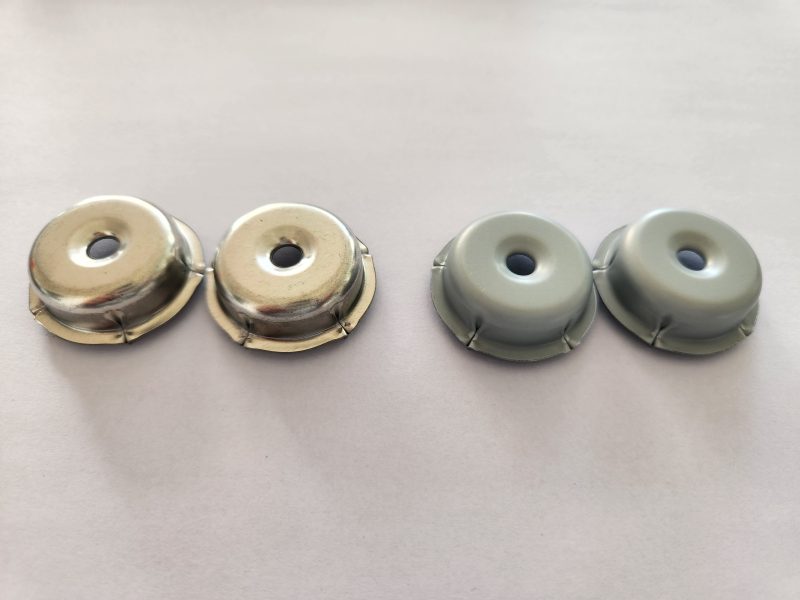
Understanding Specifications for 3mm Thick Paint Bucket Gaskets
When selecting a 3mm thick gasket for a paint bucket, precision in dimensions and material properties is essential to ensure a secure, leak-proof seal. This thickness strikes a balance between flexibility and durability, making it suitable for various container designs and storage conditions. Below, we explore the key factors to consider when choosing a gasket of this thickness.
Inner Diameter: Ensuring a Snug Fit Within the Bucket
The inner diameter (ID) of the gasket must align closely with the bucket’s internal opening to prevent leaks. For a 3mm thick gasket, the ID should account for the material’s slight compression under pressure. Typically, the ID ranges from slightly smaller than the bucket’s opening to nearly identical, depending on the gasket’s flexibility and the container’s design.
- Flexible materials (e.g., silicone or rubber): These can tolerate an ID that’s 0.1cm–0.3cm smaller than the bucket’s opening, as they’ll compress to fill gaps without losing their seal.
- Rigid materials (e.g., certain plastics): Require an ID that matches the bucket’s opening almost exactly, as they lack the ability to conform to minor discrepancies.
For example, if the bucket’s opening measures 20cm, a flexible 3mm thick gasket might have an ID of 19.8cm, while a rigid one would need an ID closer to 20cm.
Outer Diameter: Covering the Rim or Lid Effectively
The outer diameter (OD) determines how well the gasket covers the bucket’s rim or lid, ensuring no gaps remain where leaks could occur. For a 3mm thick gasket, the OD depends on the sealing design and the container’s size:
- Flat-ring gaskets: These sit between the bucket and lid, requiring an OD that matches the lid’s sealing surface. If the lid’s outer edge measures 22cm, the gasket’s OD should be slightly smaller (e.g., 21.8cm) to fit snugly without overhanging.
- Full-face gaskets: These cover the entire lid, often needing an OD slightly larger than the bucket’s outer rim (e.g., 22.5cm for a 22cm rim) to ensure full contact and sealing.
A 3mm thickness adds stability to the gasket, helping it maintain its shape under pressure while still conforming to minor surface irregularities.
Material Properties: Balancing Flexibility and Chemical Resistance
The gasket’s material must withstand the paint’s chemical composition and storage conditions without degrading. For a 3mm thick gasket, common materials include:
- Silicone: Offers excellent flexibility, temperature resistance (-60°C to 230°C), and chemical inertness, making it ideal for a wide range of paints and storage environments.
- Nitrile rubber: Resistant to oils, fuels, and many solvents, this material is suitable for paints containing these substances, though it may not perform as well in extreme temperatures.
- EPDM rubber: Provides strong resistance to water, steam, and UV exposure, perfect for outdoor storage or applications involving moisture-sensitive paints.
- Neoprene: Combines chemical resistance with durability, though its compatibility varies depending on the paint’s formulation.
A 3mm thickness enhances the gasket’s ability to resist punctures or tears while maintaining its sealing properties under compression.
Compression and Sealing Performance: How Thickness Affects Function
The 3mm thickness influences the gasket’s compression ratio and sealing capability. When the lid is closed, the gasket should compress by 20%–30% to create a tight seal without being overstressed.
- Lower compression (20%): Suitable for flexible materials like silicone, which can maintain their seal with minimal deformation.
- Higher compression (30%): May be necessary for stiffer materials or containers with slight irregularities, ensuring the gasket fills gaps and prevents leaks.
This thickness also helps distribute pressure evenly across the sealing surface, reducing the risk of weak spots or uneven wear over time.
Application-Specific Considerations for 3mm Thick Gaskets
Different paint bucket designs and usage scenarios may require adjustments to the gasket’s specifications:
- High-temperature storage: If the bucket will be exposed to heat, choose a material like silicone that won’t lose its shape or sealing ability.
- Chemical exposure: For paints containing aggressive solvents, nitrile or EPDM rubber may offer better resistance than standard materials.
- Outdoor use: UV-resistant materials like EPDM or silicone help prevent degradation from sunlight exposure.
A 3mm thickness provides enough stability to handle these conditions while still allowing the gasket to conform to the bucket’s shape.
Common Mistakes to Avoid When Selecting a 3mm Thick Gasket
- Choosing the wrong material: A gasket designed for water may fail when exposed to oil-based paints or solvents, even if the dimensions are correct.
- Ignoring compression requirements: Over-compressing a 3mm thick gasket can reduce its lifespan, while under-compressing it may lead to leaks.
- Reusing worn gaskets: Over time, gaskets lose elasticity and compressibility, making them less effective at preventing leaks. Replace them periodically to maintain optimal performance.
By focusing on inner and outer diameter accuracy, material compatibility, and compression properties, you can select a 3mm thick gasket that ensures a reliable, leak-proof seal for your paint bucket.