
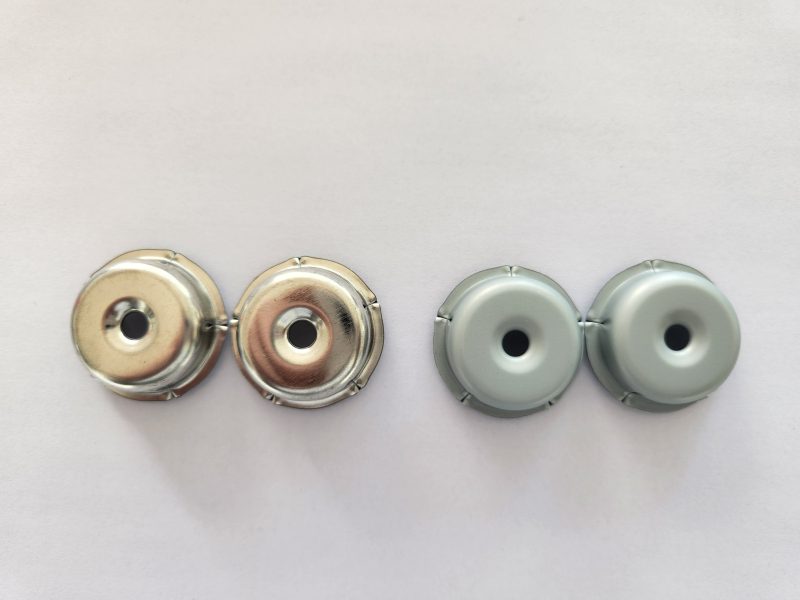
Selecting the Right Gasket Specifications for a 10cm Circular Paint Bucket
When working with a 10cm circular paint bucket, choosing the correct gasket is essential for preventing leaks and maintaining product integrity. The gasket’s dimensions, material, and design must align with the container’s specifications to ensure a secure seal. Below, we explore key factors to consider when selecting a gasket for this application.
Inner Diameter Precision for Optimal Fit
The inner diameter (ID) of the gasket must closely match the bucket’s opening to create an effective seal. For a 10cm bucket, the ID should typically range from 9.8cm to 10.2cm, accounting for minor manufacturing variations. A slightly larger ID (e.g., 10.1cm) allows for easier installation without compromising sealing performance, while a smaller ID (e.g., 9.9cm) may provide a tighter fit for containers with irregular edges.
- Flexibility matters: Softer materials like silicone or rubber can accommodate slight ID mismatches, while rigid plastics require exact measurements.
- Thermal expansion: If the bucket will be exposed to temperature fluctuations, choose a gasket with an ID that accounts for material expansion or contraction.
Outer Diameter and Coverage Area
The outer diameter (OD) determines how well the gasket covers the bucket’s rim or lid. For a 10cm bucket, the OD usually falls between 11cm and 14cm, depending on the sealing design:
- Flat-ring gaskets: These sit between the bucket and lid, requiring an OD that matches the lid’s sealing surface. An OD of 11.5cm might suffice for standard designs.
- Full-face gaskets: These cover the entire lid, often needing an OD slightly larger than the bucket’s outer rim (e.g., 13cm) to ensure full contact.
A gasket with an OD that’s too small may leave gaps, while one that’s too large could interfere with the lid’s closure mechanism.
Material Selection for Chemical and Environmental Resistance
The gasket’s material must withstand the paint’s chemical composition and storage conditions. Common options include:
- Nitrile rubber: Resistant to oils, fuels, and many solvents, making it suitable for most paint formulations.
- Silicone: Offers excellent temperature resistance (-60°C to 230°C) and flexibility, ideal for varying climates.
- EPDM rubber: Provides strong resistance to water, steam, and UV exposure, perfect for outdoor storage.
- Neoprene: Combines chemical resistance with durability, though it may not be suitable for all paint types.
Avoid materials that degrade when exposed to specific solvents or extreme temperatures, as this could lead to seal failure.
Thickness and Compression Requirements
Gasket thickness affects both sealing performance and ease of use. Thicker gaskets (5mm–10mm) compensate for uneven surfaces but require more compression force, while thinner gaskets (1mm–3mm) offer precision for smooth, rigid containers.
- Compression ratio: The gasket should compress by 20%–30% under normal operating conditions to create a tight seal without overstressing the material.
- Hardness (durometer): Softer gaskets (40–60 Shore A) conform better to irregularities, while harder gaskets (70+ Shore A) maintain shape under pressure.
For a 10cm bucket, a medium-thickness gasket (3mm–5mm) with moderate hardness often provides the best balance of flexibility and durability.
Installation Best Practices
Even with the right specifications, improper installation can lead to leaks. Follow these tips:
- Clean surfaces: Remove dirt, paint residue, or debris from the bucket rim and lid to ensure the gasket sits flush.
- Apply even pressure: When closing the lid, distribute force uniformly to avoid deforming the gasket.
- Avoid over-tightening: Excessive pressure can crush the gasket, reducing its lifespan and sealing capability.
- Check for alignment: Ensure the gasket is centered on the rim before securing the lid.
Common Mistakes to Avoid
- Using the wrong material: A gasket designed for water may fail when exposed to paint solvents or acids.
- Ignoring temperature effects: Cold temperatures can stiffen rubber gaskets, while heat may cause them to expand and lose shape.
- Reusing worn gaskets: Over time, gaskets lose elasticity and compressibility, compromising their ability to seal. Replace them periodically.
By focusing on inner and outer diameter accuracy, material compatibility, thickness, and proper installation, you can select a gasket that ensures a reliable, leak-proof seal for your 10cm circular paint bucket.