
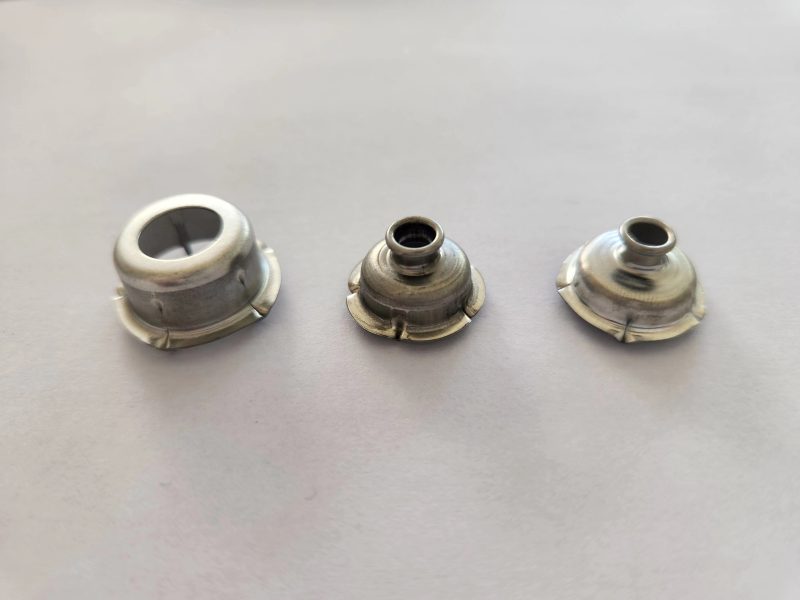
Strength in Sealing: The Importance of Tensile and Tear-Resistant Gaskets for Paint Buckets
Paint storage systems rely on durable gaskets to maintain airtight seals, prevent leaks, and protect contents from environmental contaminants. However, these components face constant mechanical stress during handling, transportation, and storage. Without sufficient tensile strength and tear resistance, gaskets can fail, leading to product loss, safety risks, and operational inefficiencies. This article examines the technical requirements, material innovations, and application-specific benefits of robust gaskets designed for industrial paint containers.
The Mechanics of Mechanical Stress in Paint Storage
Paint buckets endure repeated compression, tension, and flexing throughout their lifecycle. During filling, the gasket compresses under pressure to create a seal. When the bucket is moved or stacked, lateral forces may stretch or distort the material. Over time, these cycles weaken standard elastomers, causing cracks or splits that compromise sealing performance.
Common Stress Factors Affecting Gasket Durability
- Dynamic Loading: Vibrations during transportation or shifting loads can create micro-tears in weak materials. For example, a gasket made from low-density rubber may develop surface fissures after repeated impacts, reducing its ability to hold pressure.
- Thermal Expansion: Temperature fluctuations cause materials to expand and contract, inducing stress concentrations at edges or corners. Without proper elasticity, these areas become prone to tearing under strain.
- Chemical Softening: Some paint formulations contain solvents that weaken certain polymers over time. A gasket exposed to aggressive chemicals may lose its tensile properties, becoming brittle and susceptible to rupture.
Enhancing Tensile Strength Through Material Engineering
To withstand mechanical stress, gaskets must balance flexibility with high tensile strength—the ability to resist pulling forces without breaking. Advanced polymers and composite materials have revolutionized this balance, offering superior performance compared to traditional options.
Key Material Innovations for Improved Tensile Resistance
- Fiber-Reinforced Elastomers: Incorporating aramid or glass fibers into rubber matrices increases tensile strength by distributing stress across a reinforced network. These composites maintain flexibility while resisting deformation under load, making them ideal for heavy-duty applications.
- Thermoplastic Urethanes (TPUs): TPUs combine the elasticity of rubber with the processing advantages of plastics. Their molecular structure allows for customizable hardness levels, enabling engineers to optimize tensile properties for specific use cases. For instance, a high-durometer TPU gasket can endure significant pulling forces without stretching permanently.
- Crosslinked Polymers: Chemical crosslinking creates a three-dimensional molecular structure that enhances material integrity. Crosslinked silicone gaskets, for example, resist tearing even when stretched to twice their original length, ensuring long-term reliability in demanding environments.
Tear Resistance: Preventing Catastrophic Failure
While tensile strength measures a material’s ability to withstand pulling forces, tear resistance determines its capacity to stop crack propagation once initiated. A small nick or scratch in a gasket can quickly escalate into a full tear under stress, rendering the seal ineffective.
Design Strategies for Maximizing Tear Resistance
1. Optimized Geometry
The shape of a gasket significantly impacts its tear resistance. Rounded edges and smooth transitions reduce stress concentrations, minimizing the likelihood of crack initiation. For example, a gasket with a beveled edge distributes force more evenly than one with sharp corners, enhancing its ability to resist tearing during installation or removal.
2. Layered Constructions
Multi-layer gaskets combine materials with complementary properties to improve overall performance. A base layer of high-tensile rubber may be bonded to a tear-resistant topcoat made from a harder polymer. This hybrid design resists both pulling forces and crack propagation, offering dual protection against mechanical failure.
3. Surface Treatments
Coatings or surface modifications can enhance tear resistance by reducing friction or improving adhesion. A textured surface, for instance, increases grip between the gasket and container, preventing slippage that could lead to tearing. Similarly, UV-cured coatings create a protective barrier that shields the underlying material from environmental degradation.
Application-Specific Benefits of Robust Gaskets
1. High-Pressure Storage Systems
Paints stored under pressure, such as aerosol formulations or those used in industrial spraying, require gaskets capable of withstanding internal forces without deforming. Reinforced TPUs with high tensile strength maintain seal integrity even at elevated pressures, preventing leaks that could disrupt production lines or cause safety hazards.
2. Automated Handling Environments
In facilities where paint buckets are moved by conveyor belts or robotic arms, gaskets must endure frequent impacts and abrasions. Tear-resistant composites withstand these interactions without developing surface damage, ensuring consistent performance over thousands of cycles.
3. Long-Term Outdoor Storage
Paints stored outside face exposure to sunlight, rain, and temperature extremes, all of which can weaken gasket materials. UV-stabilized elastomers with excellent tensile and tear resistance retain their properties despite prolonged environmental exposure, reducing the need for frequent replacements.
Advancing Gasket Technology for Future Challenges
As industries demand higher-performance materials, research continues to push the boundaries of gasket durability. Self-healing polymers, which automatically repair minor tears through reversible chemical bonds, are emerging as a promising solution. These materials could extend gasket lifespans and reduce maintenance costs in critical applications.
Additionally, 3D printing technologies enable the creation of custom gaskets with intricate geometries optimized for specific stress patterns. By tailoring designs to match the mechanical demands of each container, manufacturers can achieve unprecedented levels of reliability and efficiency.
Conclusion
The durability of paint bucket gaskets directly impacts product quality, operational safety, and cost efficiency. By prioritizing tensile strength and tear resistance in material selection and design, manufacturers can create seals that withstand the rigors of industrial use. As innovations in polymer science and additive manufacturing continue to evolve, the future of gasket technology promises even greater resilience, ensuring reliable performance in the most demanding environments.