
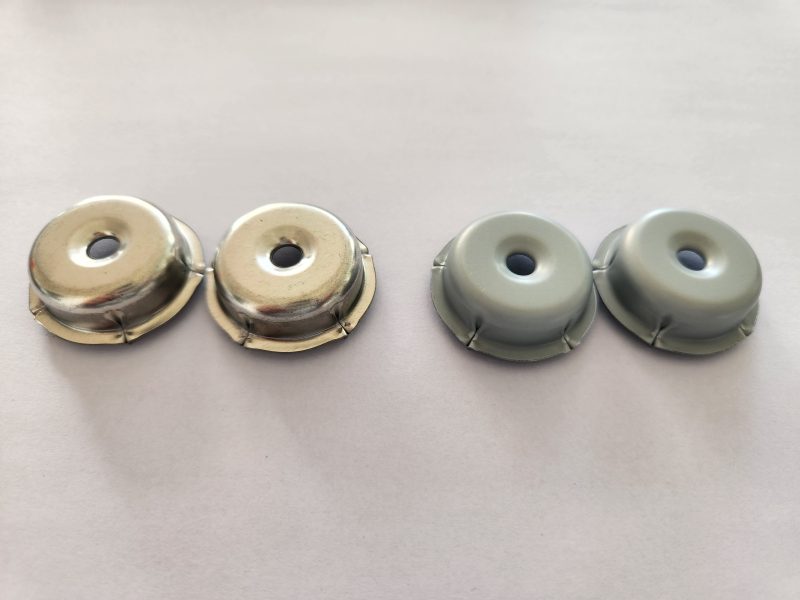
The Role of Gaskets in Paint Bucket Ventilation: Achieving Pressure Balance for Safety and Efficiency
When storing or transporting paint, maintaining proper internal pressure is critical to prevent container deformation, leakage, or chemical reactions. Paint bucket gaskets with ventilation and pressure-balancing functions are engineered to address these challenges by allowing controlled airflow while maintaining a seal against contaminants. This article explores how these specialized gaskets work, their design principles, and their importance in industrial and commercial applications.
Understanding Pressure Dynamics in Paint Storage
Paint containers, especially those filled with volatile organic compounds (VOCs), are prone to pressure fluctuations due to temperature changes, agitation, or chemical reactions. For instance, as temperatures rise, gases inside the bucket expand, increasing internal pressure. Without ventilation, this pressure can cause the lid to bulge, warp, or even pop open, leading to spills or exposure to hazardous fumes. Conversely, negative pressure—caused by cooling or vacuum effects during handling—can create a vacuum that makes reopening the container difficult or damages the seal.
A well-designed gasket addresses these issues by incorporating ventilation features that allow air to flow in or out while blocking liquids, particles, or odors. This dual functionality ensures the container remains securely sealed under normal conditions but can “breathe” when pressure differentials occur.
Key Design Features of Pressure-Balancing Gaskets
1. Micro-Perforated or Membrane-Based Structures
Many gaskets use micro-perforations or advanced membranes to regulate airflow. These materials are engineered to permit gas molecules to pass through while blocking liquids and solids. For example, expanded polytetrafluoroethylene (ePTFE) membranes are commonly used in industrial seals due to their hydrophobic and oleophobic properties, which prevent paint or solvents from infiltrating the vent. The size and density of the perforations or pores are calibrated to achieve a balance between airflow rate and protection level, ensuring compliance with safety standards for hazardous materials.
2. One-Way Valves for Controlled Ventilation
Some gaskets integrate one-way valves that open only when pressure exceeds a predefined threshold. These valves allow excess gas to escape during expansion but remain closed during compression or when external pressure is higher. This mechanism is particularly useful for paints that emit gases over time, as it prevents over-pressurization without requiring constant monitoring. The valves are typically made from durable materials like silicone or fluoropolymers to withstand chemical exposure and repeated activation cycles.
3. Compression-Resistant Frames
To maintain structural integrity under varying pressures, gaskets often feature rigid outer frames or guiding rings. These components distribute compression forces evenly across the seal, preventing localized deformation that could compromise the vent’s functionality. The frame also ensures the gasket stays in place during handling or transportation, reducing the risk of misalignment or dislodgment.
Applications and Benefits
Industrial Paint Storage and Transport
In manufacturing facilities, paint buckets are frequently moved between production lines, storage areas, and shipping docks. Pressure-balancing gaskets prevent leaks during transit by equalizing internal and external pressures, even when containers are stacked or exposed to temperature extremes. This reduces product loss, cleanup costs, and environmental hazards associated with spills.
Spray Booth Ventilation Systems
Paint booths require precise airflow management to capture overspray and fumes while maintaining a safe working environment. Gaskets with ventilation features are used in booth doors, filters, and exhaust systems to ensure consistent pressure differentials. For example, negative-pressure booths rely on these seals to prevent contaminants from escaping, while positive-pressure systems use them to keep external particles out. By optimizing airflow, these gaskets improve filtration efficiency and reduce energy consumption.
Long-Term Storage of Volatile Paints
Certain paints, such as epoxies or polyurethanes, emit gases as they cure or degrade. Without proper ventilation, these gases can build up pressure, leading to container failure or chemical reactions. Pressure-balancing gaskets mitigate this risk by allowing gradual gas release while maintaining a barrier against moisture and oxygen, which could accelerate degradation. This extends the shelf life of the paint and ensures consistent performance when used.
Conclusion
Paint bucket gaskets with ventilation and pressure-balancing capabilities are essential components in modern storage and handling systems. By combining advanced materials, precise engineering, and adaptive designs, these seals address the challenges of pressure fluctuations, chemical exposure, and environmental safety. Whether in industrial settings, spray booths, or long-term storage, they play a quiet yet critical role in maintaining product integrity and operational efficiency. As regulations on hazardous materials and workplace safety become stricter, the demand for these specialized gaskets will continue to grow, driving innovation in material science and sealing technology.