
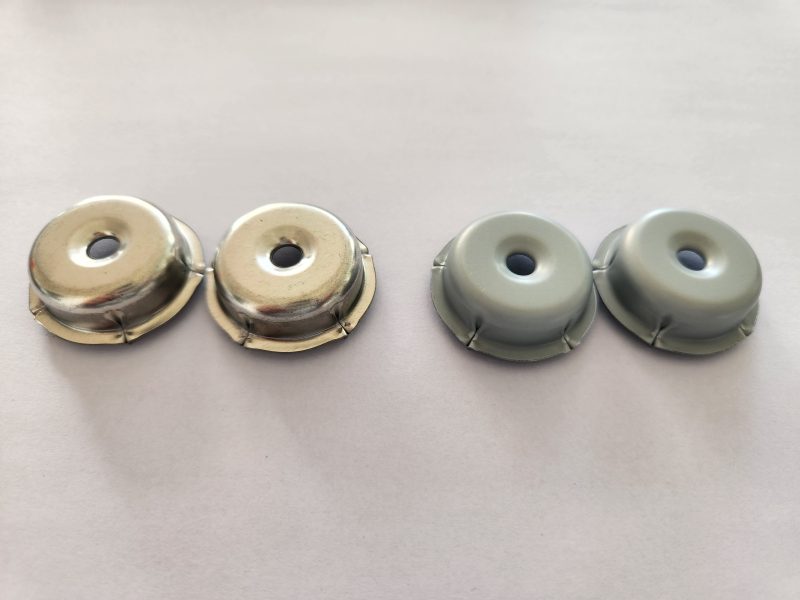
Understanding Gasket Sizes for 5cm Diameter Paint Buckets
When selecting a gasket for a 5cm diameter paint bucket, precision is crucial to ensure a leak-proof seal. While 5cm (approximately 2 inches) is a nominal measurement, gaskets are often designed with slight variations to accommodate manufacturing tolerances and material flexibility. Below, we explore key considerations for determining the right gasket dimensions.
Nominal Bore and Inner Diameter Alignment
The nominal bore of a container refers to its internal opening size, which directly impacts the gasket’s inner diameter (ID). For a 5cm bucket, the gasket’s ID should ideally match or slightly exceed this measurement to prevent interference during installation. For example, a gasket with an ID of 5.2cm may provide a snug fit while allowing for thermal expansion or minor container irregularities.
In industrial applications, gaskets for similar-sized containers often follow standardized dimensions. For instance, a 50mm nominal bore might pair with a gasket ID ranging from 50mm to 52mm, depending on the material’s compressibility. This flexibility ensures compatibility across various manufacturing batches.
Outer Diameter and Flange Design
The outer diameter (OD) of the gasket must align with the container’s flange or lid design. A gasket’s OD typically extends beyond the nominal bore to create a sealing surface against the container’s rim. For a 5cm bucket, the OD might range from 6cm to 8cm, depending on whether the container uses a flat-ring or full-face gasket design.
- Flat-ring gaskets sit between the container and lid, requiring an OD that matches the lid’s sealing area.
- Full-face gaskets cover the entire lid surface, often featuring an OD slightly larger than the container’s outer rim to ensure full coverage.
Choosing the correct OD prevents leaks caused by misalignment or insufficient sealing pressure.
Thickness and Material Compatibility
Gasket thickness influences both sealing performance and ease of installation. Thicker gaskets (e.g., 5mm to 10mm) compensate for uneven surfaces but may require higher compression forces, while thinner gaskets (1mm to 3mm) offer precision for smooth, rigid containers.
Material selection is equally important:
- Rubber gaskets (e.g., nitrile or EPDM) are flexible and resistant to chemicals, making them ideal for paints and solvents.
- Silicone gaskets withstand extreme temperatures, suitable for storage in varying climates.
- Plastic gaskets provide rigidity for lightweight containers but may lack chemical resistance.
The material’s durometer (hardness) also affects sealing—softer materials (e.g., 40-60 Shore A) conform better to irregularities, while harder materials (70+ Shore A) maintain shape under pressure.
Practical Considerations for Installation
Even with precise dimensions, installation techniques impact sealing effectiveness. For example:
- Compression force: Over-tightening a lid may deform the gasket, while under-tightening leaves gaps. Follow manufacturer guidelines for torque or pressure.
- Surface preparation: Clean the container rim and lid to remove debris that could prevent the gasket from seating properly.
- Temperature effects: Cold temperatures may stiffen rubber gaskets, reducing flexibility. Warm the gasket slightly before installation if needed.
Common Pitfalls to Avoid
- Assuming exact measurements: Always verify the container’s actual dimensions, as nominal sizes may vary slightly.
- Ignoring material limitations: A gasket designed for water may fail when exposed to solvents or acids.
- Reusing worn gaskets: Over time, gaskets lose elasticity, compromising their ability to seal. Replace them periodically.
By prioritizing nominal bore alignment, outer diameter compatibility, material suitability, and proper installation, you can select a gasket that ensures a secure, long-lasting seal for your 5cm diameter paint bucket.